
God Without Timelines
Finding Eden While In Exile
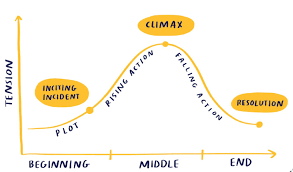
I have always loved a good story arc. Introduction. Rising action. Climax. Falling action. Resolution. There is something deeply reassuring about knowing where you are in the narrative. I love tracing themes, watching characters develop, noticing how setting presses on the story until something has to give. I love when we can name what it was all about. I like timelines for similar reasons because they tame the unknown. They make chaos teachable. They promise that if we endure long enough, meaning will eventually arrive. This life with God in exile does not feel like a story we are reading because it is a story we are living, and we don’t know how it will end, so the timeline is being built. Some of the heaviest seasons of faith come when God only gives us the next breath, the next prayer, the next small act of courage.
It is disorienting to live inside a story that refuses to tell you what act you are in. It is unsettling to be faithful without knowing whether you are in the rising action or the long middle where nothing resolves. Daniel knew this kind of story. His life did not follow a neat arc, but a long timeline spanning 80 years of service in Babylon marked by faithfulness that stretched across regimes and decades. Most of Daniel’s life was lived in the slow accumulation of days and praying toward a city he might never see again. His exile was not a chapter. It was the setting.
Esther’s story moves faster, but it offers no more certainty. Time in her world is measured by decrees and countdowns, but clarity still does not come when she wants it. Mordecai does not give her a timeline, only a question. “Who knows whether you have come to the kingdom for such a time as this?” Not when it will end. Not what will happen.
“Who knows?” lingers in all of our stories so honestly. This is what makes exile so difficult. It is not just suffering, but suffering without a narrative map. We want to know how long the chapter lasts. We want to read ahead. We want to skip the bad part. We want to know which part we’re in. However, exile teaches a different kind of faith that learns to live without narrating itself in real time.
Daniel never “returns home.” Esther never escapes the cost of her position. Their stories resist tidy conclusions because exile, in Scripture, is not a mistake. It is a place where faith is practiced without certainty, where identity is refined rather than resolved. God-without-timelines feels very unsettling, but Daniel and Esther show us that God is not absent simply because the story remains unfinished. God is doing a deeper work, teaching us how to remain present when the plot is unclear, how to trust when we cannot yet name the theme. Exile is not where faith fails. It is where faith learns how to live.

“Lost Letters From Exile”
Beloved friend,
I spent many years faithful without knowing whether it mattered. Some prayers were answered. Many were simply held. I learned that God does not always explain the story while we are living it. Still, presence sustained me when understanding did not. Do not rush yourself toward meaning. Faithfulness is enough for now.
Ask me how I know, Daniel
Dear one,
I lived quietly longer than I wanted to. I waited without knowing what the waiting was for. When the moment came, it did not arrive with certainty, only courage. Trust that the unseen days are not wasted. God is at work even when the story feels unfinished.
Sincerely, I’ve been there too…Esther
Love the line- God is at work even when the story feels unfinished. And aren’t we all unfinished.